

 În cadrul parteneriatului media dintre Masteratul pentru Traducerea Textului Literar Contemporan – Engleză (MTTLC), din cadrul Universității București și Leviathan (v. articolul din 29 decembrie 2024, click aici), publicăm traduceri ale masteranzilor pe site-ul leviathan.ro și în revista culturală trimestrială „Leviathan”.
Mai jos, prima parte a reportajului Amintirile, prezentul pandemiei de Pușa Roth, cu o prezentare preluată din revista „Leviathan”, Anul IV, Nr. 1 (10), ianuarie–martie 2021, la rubrica „Jurnal de călătorie”, p. 50 (textul cu italice). Versiuni în limba engleză de Elena Moise-Puțanu, Ana-Maria Duță și Elena-Andreea Udrea, masterande MTTLC.
Pușa Roth
Amintirile, prezentul pandemiei (1)

Nu, nu e un joc de cuvinte, ci doar un adevăr dureros ce a marcat anul 2020. În anul acesta au călătorit oamenii, însă majoritatea și-a găsit un refugiu de teama pandemiei, puțini au fost aceia care au călătorit de plăcere. M-am gândit la călătoriile mele, la bucuria, surpriza, trăirea spirituală, la amintirile pe care le păstrez și m-am oprit la o călătorie mai puțin obișnuită pentru mine, cea în care am ajuns aproape de centrul pământului, pe paralela de 9 grade, în țara primăverii eterne, Venezuela. Puteam să mă opresc undeva, în Europa, dar orice destinație aș fi ales, ar fi avut o altă dimensiune, dacă am socoti numai distanța geografică. Poate că această experiență vă va îndemna să vizitați, când vom putea călători în voie, „Mica Veneție”, această țară situată în nordul Americii de Sud, cuprinzând terminațiile nordice ale Munților Anzi, câmpia fluviului Orinoco și Podișul Guyanelor, dispuse în ordine de la nord-vest spre sud-est. Pe un afluent al râului Caroni se află Cascada Angel, cea mai înaltă din lume. Poate că după ce veți descoperi frumusețile acestei țări, veți putea exclama ca și mine: Dincolo de curcubeu e lumea! (2021)
Când vorbeşti sau scrii despre o lume sau despre o ţară, pe care nu mulţi au avut privilegiul să o vadă sau să o străbată – ţinând cont măcar de uriaşa distanţă geografică – cuvintele par a fi desprinse dintr-o formulă magică şi lipsită de substanţă. Cu o lună înaintea sinistrului ce s-a abătut asupra Venezuelei (decembrie 1999), considerată mica Veneţie a Americii Latine, am cucerit spaţiul printr-un zbor ce a traversat Tropicul Racului, a cochetat cu Triunghiul Bermudelor şi s-a încheiat între mare și munte, pe aeroportul internaţional din Caracas (noiembrie 1999).
Dacă ar trebui să numărăm scurgerea lunilor şi succesiunea anotimpurilor, noiembrie ar fi trebuit să fie, după opinia europeanului obişnuit cu cele patru anotimpuri, sfârşit de toamnă sau început de iarnă. Am ajuns însă în oraşul primăverii eterne, în locul unde „nu se întâmplă nimic” din punct de vedere meteorologic, unde iarna este cuprinsă doar într-o imagine cinematografică. Mai târziu, stând de vorbă cu o româncă, profesoară universitară, despre semnificaţia anotimpurilor acolo, pe paralela de 9 grade, mi-a mărturisit că în primii ani ai şederii sale în această ţară visa noaptea zăpadă. Un alt român, care pe 7 noiembrie 1999 împlinea 18 ani ca cetăţean al Venezuelei, îmi spunea aproape melancolic că cel mai mult şi-ar dori să vadă ghiocei.
După aceste mărturisiri, încerc să vă provoc cu o alta: motivul vizitei mele în Venezuela, aflată la peste 12 000 de km depărtare de România.
Am aflat ca din întâmplare – şi ce întâmplare fericită! – că în acest colţ al Americii Latine a fost ridicată o biserică de lemn în stil maramureşean pentru românii trăitori în ţara petrolului şi a diamantelor. Vă veţi întreba dvs., cititorii acestor rânduri, de ce a fost înălţat acest lăcaş de cult ortodox într-o lume eminamente catolică. Câţi români trăiesc aici, pe coasta Caraibelor? Sau există unul pentru toţi? Răspunsul trebuie nuanţat. Am fost surprinsă, cum veţi fi şi dvs., să aflu că în cel mai puternic municipiu al Caracasului (nu e nici o nepotrivire de termeni: capitala Venezuelei e împărţită în patru municipii independente), Chacao, primar este domnul Cornel Popescu. De peste 42 de ani locuieşte în marele oraş şi, după propria-i afirmaţie, are o activitate prodigioasă în folosul municipalităţii.
„Am fost mai mult de 20 de ani prefect, am mai fost primar numit – nu ales – acum vreo zece ani şi sunt fericit că la sfârşitul carierei mele am fost nu- mit din nou în această funcţie şi că am iarăşi posibilitatea de a face mai multe lucruri bune pentru acest municipiu care are faima de a fi cel mai bine situat economic din Venezuela şi chiar din întreaga Americă de Sud, după opinia multora.”
Şi dacă n-aş fi fost ziaristă, tot aş fi avut o mulţime de curiozităţi şi de întrebări. L-am iscodit pe domnul Cornel Popescu, încercând să mă lămuresc asupra comunităţii româneşti din Caracas, dar şi a intenţiilor sale (administrative şi economice) legate de oraş şi de această comunitate. Domnia-sa m-a informat că există o colonie românească, mică, pentru care, acum două decenii, a fost înfiinţată Casa Română din Venezuela, al cărei preşedinte este însuşi primarul. Se intenţionează crearea unei biblioteci cu cărţi româneşti. Gospodarul municipiului Chacao se mândreşte, pe bună dreptate, că Primăria are o activitate permanentă în folosul cetăţeanului şi că va face tot posibilul ca această comunitate să păstreze limba. Cât despre România, părerea domnului primar este că oriunde te-ai afla, trebuie să-ţi ajuţi ţara.
„Noi ne-am gândit întotdeauna la ţară. Guvernele trec iar ţara rămâne…”

Poartă spre cer
Revin la motivul vizitei mele în compania delegaţiei române conduse de Prea Fericitul Părinte Teoctist, Patriarhul Bisericii Ortodoxe Române: într-o zi de duminică a lui noiembrie 1999 a fost sfinţită prima biserică românească din această parte a lumii. Toţi cei prezenţi, români din ţară şi din Caracas, au avut sentimentul că în acea zi cu numărul odihnei, 7, s-a deschis o poartă spre cer. Acolo, pe locul unde a fost înălţată biserica, poate că Domnul şi-a aplecat privirea făcând cu putinţă ca, aşa cum spunea părintele paroh Costică Popa, de atunci „în inima Caracasului să bată o inimă românească”.
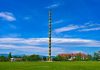
Din bogatul cartier Lagunita Country Club, minunea maramureşeană domină maiestuos lumea latino-americană atât prin înălţimea turlei sale (35 de metri), cât şi prin singularitatea ei. Monument unicat, această construcţie din lemn, lucrată la Sighetu Marmaţiei, transportată pe apă şi asamblată de aceiaşi meşteri maramureşeni, este singulară şi prin faptul că are pictură interioară. Aceasta, pe lângă cele 24 de icoane lucrate în metal, oferite de pictoriţa Mihaela Profiriu Mateescu. Biserica urmează întocmai tradiţia secolului al XVI-lea şi „este într-un fel”, după cum afirma domnul Popescu, „cadoul făcut de români Venezuelei”. Acest român plecat din ţară în anul 1957 nu şi-a uitat nici patria, nici poporul şi nici biserica. A dorit, poate, să arate lumii geniul unui neam, dar şi vechimea prin secole a spiritualităţii creştin-ortodoxe. A fost şi va rămâne un gest de nobleţe să aduci o fărâmă de Românie într-o lume ale cărei simboluri au alte dimensiuni.
Bijuterie de arhitectură străveche maramureşeană, biserica se va înscrie în patrimoniul cultural al Venezuelei, îmbinându-se armonios cu peisajul fascinant al caselor coloniale şi al vilelor pierdute prin vegetaţia luxuriantă.
Fluturi uriaşi cu aripile deschise
În Venezuela ziua este sensibil egală cu noaptea, soarele răsare în jurul orei 6.00 şi apune imediat după ora 18.00. M-a uimit trecerea bruscă de la zi la noapte şi atunci am realizat ce minune este să priveşti răsăritul şi apusul în splendoarea celor patru anotimpuri. În Europa omul este supus tot timpul schimbărilor pe care le impune venirea iernii sau a primăverii. Aici viaţa este mult mai uşoară, mult mai simplă, venezueleanul obişnuit nefăcându-şi prea multe griji pentru ziua de mâine, în opinia majorităţii doar „astăzi” contează. Am văzut oraşul mai ales de la fereastra hotelului sau din maşina municipalităţii condusă de oameni de ordine. Nu prea am avut privilegiul de a deveni o anonimă în acest oraş dominat de statuia lui Simón Bolívar, Eliberatorul. De ce? Simplu. În această parte a lumii să fii alb este un avantaj din punctul de vedere al profesiunii, dar şi o ţintă în oraşul furnicar. Rata criminalităţii este extrem de ridicată. Dacă opui rezistenţă când eşti somat să-ţi oferi geanta sau banii din buzunar, devii, fără prea multe parlamentări, victimă.
Majoritatea venezuelenilor trăiesc în celebrele favele, case construite într-o singură noapte pe versanţii munţilor. În aproximativ 12 ore apar construcţii fragile din carton, material plastic sau chiar cărămidă, ca într-un joc de cuburi, lipite parcă una de alta de mâini stângace. Pământul aparţinând statului, cetăţeanul, votantul, este scutit de impozite şi de orice alte taxe. Aceasta ar fi explicaţia aglomerării de case în majoritate fără ferestre, ci doar cu zăbrele în tradiţionalul stil colonial. Cei care îndrăznesc să construiască ziua sunt arestaţi pentru simplul motiv că încalcă legea. Dacă, de pildă, casa este vopsită în exterior, adică i se face faţada, este un semn că proprietarul poate plăti impozite. Favelele, care noaptea arată ca un fluture uriaş cu aripile deschise, scot ziua la iveală sărăcia, blazonul unei populaţii inocente, fericite, pasionale, trăind cu muzică, dans şi petrecere.
Ajungând în America latină în luna noiembrie, am prins un anotimp cu o constantă de 25 de grade Celsius, care nu avea nicio legătură cu ce lăsasem acasă, aproape iarnă. Până şi ploaia are aici un program bine stabilit, localnicii ştiind că va ploua de obicei după ora 16.00. N-am prea văzut umbrele, rost că ploaia este o binecuvântare pentru plămânul venezuelean care în cazul acesta se numeşte Caracas, oraşul dintre munţi. Situat la peste 1050 de metri înălţime, oraşul se întinde generos pe o vale pe care compatrioţii noştri o comparau cu Valea Prahovei. Munţii împăduriţi până la ultimul vârf se ascund graţios după nori aşezaţi parcă de mâna omului. Culorile predominante sunt verde şi roşu. Prozaic spus, parcă ar creşte totul pe un minereu de fier. Explicaţia reală: Venezuela este unul dintre exportatorii de minereu de fier ce are o concentraţie foarte interesantă de sulf, de unde şi această culoare.
Ţară bogată sau săracă? Depinde din ce punct de vedere priveşti. Mica Veneţie sud-americană stă aşezată cuminte pe o pungă uriaşă de petrol, binecuvântată fiind şi de zăcăminte de diamant. Şi dacă tot are o pungă proprie ce aduce beneficii ţării şi prosperitate unei anumite categorii de oameni, cetăţeanul de rând se mulţumeşte cu bucuriile cotidiene. Drept pentru care nu mai are timp să muncească. Poate de aceea dolarul se pierde printre cei 625 de bolivari, indicele de paritate. Ţară a contrastelor, în Caracas există o reţea de autostrăzi construită de o companie franceză, considerată una dintre cele mai scumpe din lume, după opinia autorităţilor locale. Tot aici există cel mai mare magazin universal din America Latină, Zambil. Construit pe opt nivele, dintre care patru subterane, magazinul era aprovizionat cu tot ce îşi poate dori un cumpărător exigent. M-au impresionat vitrinele aranjate pentru sărbătoarea Crăciunului: brazi, zăpadă şi haine groase pentru anotimpul rece, mare atracţie pentru locuitorii oraşului. Lui, orașului, i s-a mai adăugat şi singura biserică ortodoxă de pe acest continent.
Altă întrebare se impune. În ce categorie socială se înscriu românii? Majoritatea având studii superioare, păstrând vrednicia strămoşilor lor, sunt oameni realizaţi în domeniile în care îşi exercită profesiunea. Nu am aflat de niciun român care să locuiască în favele. Mare bucurie a sufletului să descoperi verticalitatea fraţilor tăi risipiţi în lume. Profesorul universitar Vasilica Cotofleac-Râmnicelu, decan al Facultăţii de Filosofie a Universităţii Santa Rosa din Caracas, era de părere că românii ştiu să-şi păstreze tradiţia, limba, oricât de departe s-ar afla de casă.
Inginerul constructor Murat Elian, ajuns în Venezuela acum 40 de ani, poartă în inimă nostalgia ţării în care s-a născut şi, la fel ca ceilalţi români, a încercat să-şi formeze mica Românie în Venezuela. Soţii Ludmila şi Mihai Boroş afirmă că „românii sunt o comunitate mică”, dar nu cred că „în lume mai există o comunitate atât de mică cu o biserică atât de frumoasă. Suntem foarte uniţi, ne uneşte biserica, ne unesc obiceiurile şi tradiţiile.” Cei mai mulţi dintre cei veniţi cu atâta vreme în urmă s-au integrat stilului de viaţă latino-american. Le-am simţit însă bucuria şi emoţia când ne-am întâlnit. Deşi aşezaţi din punct de vedere social şi economic, majoritatea vorbea cu nostalgie de „acasă”. Visau să revină în ţara cu patru anotimpuri. Mi-a fost dat să aud cât de frumos şi curat au păstrat limba română după ani de despărţire. Am mâncat la masa lor atât arepa (mămăligă prăjită, preparată din mălai alb), salată de bambus şi trestie de zahăr, tradiţionalele umpluturi înfăşurate în frunze de bambus legate cu sfoară şi fierte, dar şi sarmale şi mititei. Au ştiut să păstreze obiceiurile şi tradiţiile româneşti, ştergând astfel enorma distanţă geografică dintre Venezueala şi România.
Noiembrie 1999
Din volumul Dincolo de curcubeu e lumea, București, Editura Viitorul Românesc, 2022
Pușa Roth
Memories, the Present of the Pandemic (1)
Translated into English by Emilia Moise-Puțanu

No, it’s not a play on words, but simply a painful truth which marked the year of 2020. This was the year in which people travelled, but most found a refuge out of fear of the pandemic, only a few travelled for pleasure. I thought about my journeys, about the joy, the surprise, the spiritual experience, about the memories I keep and I stopped at a journey a bit unusual for me – the one in which I came close to the center of the Earth, on the 9th parallel, in the land of eternal spring, Venezuela. I could have stopped somewhere in Europe, but whatever destination I would have chosen, would have had a different dimension, if we only consider the geographical distance. Perhaps this experience will encourage you to visit, when we’ll be able to travel freely again, ”Little Venice”, this country located in the North of South America, encompassing the northern ends of the Andes Mountains, the plains of the Orinoco River, and the Guiana Highlands, arranged from northeast to southeast. On a tributary of the Caroní River lies Angel Falls, the highest waterfall in the world. Perhaps after you discover the beauties of this country, you will be able to exclaim, as I did: Beyond the rainbow lies the world! (2021)
When you speak or write about a world or about a country that not many have had the privilege to see or cross – taking into account at least the immense geographical distance – the words seem to be drawn from a magical formula and to be devoid of any substance. One month before the disaster that struck Venezuela (December 1999), considered the Little Venice of Latin America, I conquered space through a flight that crossed the Tropic of Cancer, flirted with the Bermuda Triangle, and ended between sea and mountain, at the international airport in Caracas (November 1999).
If we were to count the passage of months and the succession of seasons, November should have been, according to the opinion of the European accustomed to the four seasons, the end of autumn or the beginning of winter. Instead I arrived in the city of eternal spring, in a place where ”nothing ever happens” from a meteorological standpoint, where winter exists only as a cinematic image. Later, while talking to a Romanian woman, a university professor, about the meaning of the seasons there, on the 9th parallel, she confessed that in the first years of her stay there in this country she used to dream of snow at night. Another Romanian, who on November 7th 1999 was celebrating 18 years as a citizen of Venezuela, told me almost melancholically that what he wished for most was to see snowdrops.
After these confessions, I try to challenge you with another one: the reason behind my visit to Venezuela, located more than 12,000 kilometers away from Romania.
I found out, almost by chance – and what a fortunate turn of events it was! – that in this corner of Latin America a wooden church in the Maramureş style was built for the Romanians living in the land of oil and diamonds. You, the readers of these lines, may ask yourselves why this Orthodox place of worship was erected in an eminently Catholic world. How many Romanians live here, on the Caribbean coast? Or is there just one church for all of them? The answer needs to be nuanced. I was surprised, as you will be too, to find out that in the most powerful municipality of Caracas (this is no misuse of terms: the capital of Venezuela is divided into four independent municipalities), Chacao, the mayor is Mr. Cornel Popescu. He has lived in the great city for over 42 years and, by his own account, has carried out a remarkable activity in the service of the municipality.
”I was perfect for more than 20 years, I also served as an appointed – not elected – mayor about ten years ago and I’m happy that at the end of my career I have been appointed once again to this position and that I once again have the opportunity to do many good things for this municipality, which has the reputation of being the best economically positioned in Venezuela and even in the whole of South America, in the opinion of many.”
And even if I had not been a journalist, I would still have had a great many curiosities and questions. I questioned Mr. Cornel Popescu, trying to clarify both the situation of the Romanian community in Caracas and his intentions (administrative and economic) regarding the city and this community. He informed me that there is a small Romanian colony, for which, two decades ago, the Romanian House of Venezuela was established, with the mayor himself serving as its president. There are plans to create a library with Romanian books. The steward of the municipality of Chacao takes rightful pride in the fact that City Hall carries out a permanent activity in the service of its citizens and that it will do everything in its power to ensure that this community preserves its language. As for Romania, the mayor’s view is that wherever you may be, you must help your country.
”We have always thought about our country. Governments come and go, but the country remains…”


A Gate Towards the Heavens
Translated into English by Ana-Maria Duță

I return to the reason for my visit in the company of the Romanian delegation, led by His Beatitude Father Teoctist, the Patriarch of the Romanian Orthodox Church: on a Sunday in November 1999, the first Romanian Church in this part of the world was consecrated. All those present, native Romanians and those from Caracas, had the feeling that on that day which bore the number of rest, 7, a gate towards the Heavens had been opened. There, on the land on which the church had been erected, the Lord, perhaps, had looked down upon it, making it possible since then ”for a Romanian heart to beat in the heart of Caracas”, as the parish priest, Father Costică Popa, said.
From the wealthy Lagunita Country Club neighbourhood, the Maramureș wonder majestically dominates the Latin-American world both through its tower’s height (35 meters) and through its singularity. As a unique monument, this wooden structure, crafted in Sighetu Marmației, transported by water, and assembled by the same craftsmen from Maramureș, distinguishes itself from others through its interior paintings, which come in addition to the 24 icons carved in metal offered by the painter Mihaela Profiriu Mateescu. The church strictly follows the tradition of the 16th century and ”is in a way”, as Mr. Popescu said, ”the gift from Romanians to Venezuela”. This Romanian man, who had left the country in 1957, did not forget about his homeland, nor about his people or his church. Perhaps, he wanted to show to the world the genius of a nation, but also the centuries-old Christian-Orthodox spirituality. It was and will remain a noble gesture to bring a piece of Romania in a world whose symbols have other facets.
As a jewel of the ancient Maramureș architecture, the church will become a part of Venezuela’s cultural heritage, blending harmoniously into the fascinating landscape of colonial houses and the villas lost to the lush vegetation.
Giant Butterflies with Open Wings
Translated into English by Elena-Andreea Udrea

In Venezuela, the days are noticeably equal to the nights, the sun rises around 6 a.m. and sets after 6 p.m. I was amazed by the sudden transition from day to night and then I realized how wonderful it is to watch the dawn and the dusk filtered through the glory of the four seasons. In Europe, the man is permanently exposed to the changes imposed by the arrival of winter or spring. Here life is much easier, much simpler, the average Venezuelan not worrying too much about tomorrow. The majority thinks that only ”today” matters. I saw the city from the hotel’s window or from the municipality’s car driven by security. I didn’t quite have the privilege to become anonymous in this city ruled by Simón Bolívar’s statue, the Liberator. Why? It’s simple. Being white in this part of the world is an advantage, professionally speaking, but also a target in the beehive. The crime rate is extremely high. If you show resistance when you’re ordered to give away your bag or the money in your pocket, you become a victim without discussion.
The majority of Venezuelans live in the famous favelas, houses built in the span of one single night on the mountainsides. In approximately 12 hours arise fragile buildings from cardboard, plastic or even bricks, like playing building blocks and gluing them together clumsily. Since the ground belongs to the state, the citizen, the voter, is exempt from levies and any other federal taxes. This would explain the cluttering of houses, most of them without windows and only with lattice in the traditional colonial style. The ones who dare to build during daytime are arrested for simply breaking the law. If, for example, the exterior of the house is painted, meaning they are getting the facade done, then that means they can pay the taxes. The favelas, which in the nighttime look like giant butterflies with open wings, reveal in the daytime the poverty, the heraldry of an innocent, happy, passionate population living surrounded by music, dancing and celebration.
When I arrived in Latin America in November, there temperature was constantly 25°C, a season which was nothing like the upcoming winter I had experienced back home. Even rain runs by a set schedule. The locals know that it’ll usually rain after 4 p.m. I didn’t see many umbrellas, sign that rain was a blessing for the Venezuelan ground which, in this case, is called Caracas, the city surrounded by mountains. Located over 1050 meters high, the city covers a generous valley which our compatriots would compare to Prahova Valley. The forested mountains hide behind the carefully placed clouds. Green and red prevail. Putting it prosaically, it looks as if everything grew on an iron ore. The real explanation: Venezuela is one of the iron ore exporters which has a very interesting level of sulphur concentration, hence this colour.
Is it a rich country or a poor one? Depends from what perspective you’re looking at it. The South American Little Venice sits quietly on a pouch of oil. It’s also blessed by diamond deposits. Even if it has its proper pouch that offers benefits to the country and prosperity to a certain category of people, the common citizen is satisfied with the daily joys. As a result, he has no time left to work. Maybe that’s why the dollar gets lost among the 635 bolivars, the parity index. Country of contrasts, Caracas harbours a highway network built by a French company and considered one of the most expensive in the world by the local authorities. Here there’s also the biggest department store in Latin America, Sambil. Having 8 floors, from which 4 underground, the store was supplied with everything a strict buyer would wish for. I was impressed by the Christmas-themed showcases: trees, snow and warm clothes for the cold season. It was a great attraction for the townspeople. The city was also endowed with the only Orthodox church on this continent.
It begs another question. What social category do Romanians get placed in? Having completed their higher education and preserving their ancestors’ diligence, the majority are accomplished people in their respective fields. I haven’t found any Romanian to live in a favela. There’s a great joy in discovering the rectitude of your brothers scattered across the world. The university professor Vasilica Cotofleac-Râmnicelu, dean of the Faculty of Philosophy of the Santa Rosa University in Caracas, believed that Romanians knew how to preserve their tradition and language no matter how far from home they were.
The civil engineer Murat Elian, who arrived in Venezuela 40 years ago, bears in his heart the longing for the country in which he was born and, like the other Romanians, he tried to build his little Romania in Venezuela. The Boroş husband and wife, Ludmila and Mihai, state that ”the Romanians are a small community”, but I don’t think that ”there’s another small community with such a beautiful church in the world. We’re very united, brought together by the church, by customs and tradition.” The majority of the ones who arrived here long time ago adapted to the Latin American lifestyle. Yet I felt their joy and excitement when we met. Despite being socially and economically settled, most of them ache for their ”home”. They dreamt about returning to the country with four seasons. I had the opportunity to hear how beautifully and correctly they kept the Romanian language years after their departure. I ate at their table Arepa (fried polenta (1), prepared from white corn flour), Bamboo Shoot Salad and Sugarcane, the traditional fillings wrapped in bamboo leaves and tied with thread and boiled, but also sarmale (2) and mititei (3). They knew how to keep the Romanian customs and traditions, thus erasing the geographical distance between Venezuela and Romania.
November 1999
From the volume Beyond the Rainbow is the World, Bucharest: Viitorul Românesc Publishing House, 2002
(1) Traditional Romanian dish made out of yellow maize flour.
(2) Traditional Romanian dish made of leaves rolled around a filling of minced meat, grains such as rice, or both.
(3) Traditional Romanian dish consisting of grilled ground meat sausages made from a mixture of beef, lamb and pork, with spices.