
 Așa cum anunțam, în cadrul parteneriatului media dintre Masteratul pentru Traducerea Textului Literar Contemporan – Engleză (MTTLC), din cadrul Universității București și Leviathan (v. articolul din 29 decembrie 2024, click aici), publicăm traduceri ale masteranzilor pe site-ul leviathan.ro și în revista culturală trimestrială „Leviathan”.

Începem astăzi cu fragmente din traducerile realizate de Diana Gabriela Radu, texte diferite, poezie, proză, publicistică muzicală, urmând ca textele integrale ale traducerilor să fie publicate în primele numere din 2025 ale revistei „Leviathan.
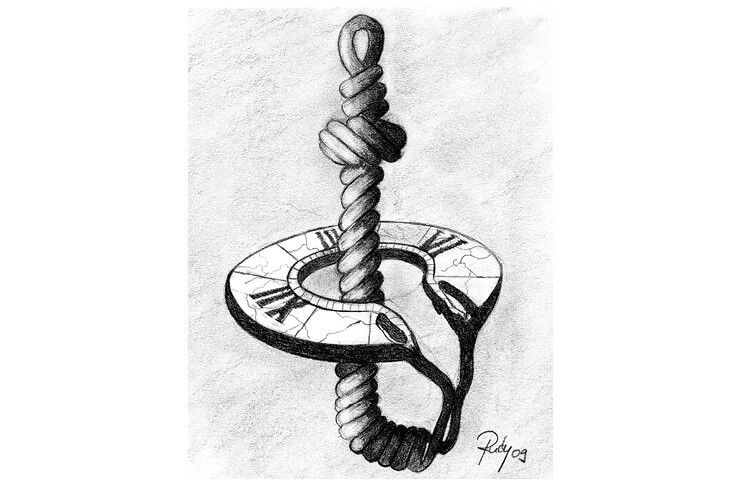
Rudy Roth
Demult
Demult,
Când roțile disperării
Și-au scrâșnit existența
În tăcerea de seve metalice
A acestui pământ ruginit
Am înțeles că Apusul
Aparține deja unor oameni
Ce s-au prefăcut într-atât a fi surzi
Încât au ajuns să-și îngroape
Fiecare bătaie a inimii
Prin fisurile mute
Din textura unui timp imobil
Și să transforme orice ecou
Într-o postapocaliptică
Și asfixiantă stare
De liniște absolută.
Palma de Mallorca – 11 decembrie 2021
Publicat în revista „Leviathan”, Anul V, Nr. 4 (17), octombrie–decembrie 2022, p. 46, click aici.
Rudy Roth
Once
Translated into English by Diana Gabriela Radu
Once,
As the wheels of despair
Have grinded their existence to dust
In the silence of metallic sap
Of this rusty Earth
I understood that the West
Already belongs to those
Who have pretended to be deaf for so long
That they’ve come to burry
Each and every beat of their hearts
Through the silent cracks
In the texture of an ever so still time
And to turn each echo
Into a post-apocalyptic
And suffocating state
Of complete silence.
Palma de Mallorca – 11 december 2021
Piane pe apă
Costin Tuchilă
Aproape toate amănuntele acestui turneu sunt cunoscute, de la itinerar la datele şi programele concertelor. Rămâne însă o întrebare: pe ce piane a cântat Franz Liszt?
Înainte de a încerca un răspuns, să recapitulăm. La 1 noiembrie 1846, numeroşi timişoreni se aflau în stradă aşteptând sosirea lui Liszt, care venea cu diligenţa de la Budapesta. Cum ora era greu de ştiut, se pare că mulţimea a aşteptat îndelung. Pe un arc de triumf construit special în piaţa din faţa catedralei, se putea citi: „Bine ai venit, Franz Liszt”. Ferestrele clădirilor erau luminate, balcoanele pline de flori. Un asemenea entuziasm şi un număr atât de mare de oameni adunaţi la un loc nu mai fuseseră văzute niciodată, după cum consemnează presa vremii. La Timişoara, Liszt a dat două concerte, în 2 şi 4 noiembrie. Primul, în Palatul Prefecturii, într-o atmosferă sufocantă, a cuprins transcripţia după Andante din Lucia di Lammermoor de Donizetti, Fantezie din opera „Norma” de Bellini, Andante cu variaţiuni de Beethoven, Ave Maria şi Regele ielelor de Schubert, Fantezie pe cântece maghiare de Liszt şi Marşul lui Rákoczy, prelucrat de asemenea de compozitorul interpret. În programul celui de-al doilea concert, în sala Teatrului, Liszt a păstrat doar cele două piese de la sfârşit, începându-şi programul cu transcripţia pentru pian a Uverturii la opera „Wilhelm Tell” de Rossini şi continuându-l cu Păstrăvul de Schubert, Hexameron de Liszt, variaţiuni de bravură pe o temă din „Puritanii” de Bellini, o mazurcă şi o poloneză de Chopin. Programe complexe, în care Liszt, care avea 35 de ani, îşi putea etala nu numai tehnica de virtuozitate, bravura, poza de tip romantic care îl făcuseră celebru în întreaga Europă, ci şi tipul special de abordare pianistică, uimitoare în epocă, muzicalitatea puţin comună şi capacitatea de a improviza. […]
Publicat în revista „Leviathan”, Anul VI, Nr. 4 (21), octombrie–decembrie 2023, pp. 52–53, click aici.
Pianos by Boat
Costin Tuchilă
Translated into English by Diana Gabriela Radu
Just about all the details of this tour are already known, from the itinerary to the dates and repertoires of the concerts. There’s still one question left unanswered: what pianos did Franz Liszt play?
Before we even try for an answer, let’s revise the facts. On November 1st of 1846, many of the people of Timisoara (1) were out in the streets awaiting Liszt arrival, who was coming by coach from Budapest. As it was rather hard to tell the exact time of his arrival, it seems like the crowd waited for a long time. On an arch of triumph, especially built in the square in front of the cathedral, laid written: “Welcome, Franz Liszt”. There was light gleaming fat the windows of the buildings, the balconies were full of flowers. Such enthusiasm and such a large number of people in one place had never been seen ever before, as noted by the newspapers of the time. In Timisoara, Liszt held two concerts, one on the 2nd and one on the 4th of November. The first took place at the Old Prefecture Palace, in an electrifying atmosphere, featuring the transcription after Andante from Donizetti’s Lucia di Lammermoor, the Fantasy from Bellini’s Norma, Beethoven’s Andante with Variations, Schubert’s Ave Maria and The Elf King, Liszt’s Fantasy on Hungarian Songs, and Rákoczy’s March, also adapted by the performing composer. In the repertoir of the second concert, held in the Theater hall, Liszt only kept the last two pieces, starting his performance with the piano transcription of the overture to Rossini’s Wilhelm Tell and continuing with Schubert’s The Trout, Liszt’s Hexameron, virtuoso variations on a theme from Bellini’s The Puritans, followed by a mazurka and a polonaise by Chopin. These were both complex programs, during which Liszt, who was 35 years old, could bring forward not only his virtuoso technique, his bravura and his romantic persona, which made him famous in all Europe, but also his unique approach to piano performance, utterly amazing in that era, his out of the ordinary musicality and his remarkable ability to improvise. […]
(1) City in western Romania, known for its Secessionist architecture.
Planeta pisicilor
Pușa Roth
Lumea se îndrepta vertiginos spre mileniul patru, mai erau puțini ani, dar viteza cu care au venit schimbările, a șters aproape entuziasmul omenirii. Foarte mulți părăsiseră Planeta Albastră pentru alte spații, alte planete, iar deplasările nu mai erau un eveniment mondial, ci intrau în obișnuința aproape cotidiană. Romantica lună, astrul nopții, era o destinație comună, iar alte planete deveniseră locuibile cu ajutorul invențiilor, al tehnicii avansate, al inteligenței artificiale etc. Grație acestor facilități, gradul de inteligență al animalelor de companie a devenit sensibil egal cu cel al oamenilor, acestea însușindu-și limbajul articulat, dar și îndeletniciri care până la un moment dat erau în exclusivitate apanajul pământenilor. Așa s-a întâmplat că pisicile, animale foarte apropiate de om, au învățat să vorbească, să studieze, să inventeze, să devină libere, să-și aleagă locul unde vor să locuiască.
Trebuie să adăugăm că prima pisică, mai bine spus un motan, animal de companie al unui om de știință, cercetător, inventator, a beneficiat de atenția stăpânului său care a avut ideea de a-și învăța animalul de companie să vorbească, să fie independent, mai ales că pisica este prin naștere un animal inteligent. Așa că, după această uimitoare revoluție, stăpânii pisicilor au putut să se desprindă, să își lase companioanele să urmărească proiectele și să evadeze pentru un timp scurt pe cine știe ce planetă. […]
Publicat în revista „Leviathan”, Anul VII, Nr. 3 (24), iulie–septembrie 2024, pp. 129–130, click aici.
Cats’ Planet
Pușa Roth
Translated into English by Diana Gabriela Radu
The world was swiftly heading towards the fourth millennium, it was only a few years away, but the rapid pace, at which the changes had appeared, has almost wiped out mankind’s enthusiasm. Many had left the Blue Planet for other galaxies, other planets, and these travels were no longer a global event, but they’d rather become an almost daily occurrence. The Ever so Romantic Moon, the star of the night, was a common destination, and other planets have become habitable by means of certain inventions, advanced technique, artificial intelligence and so on. Due to these facilities, the IQ of house pets has become reasonably equal to that of humans, as they have taken up on not only articulate language, but also on certain habits that, until a point in time, used to belong to humans alone. It so happened that cats, animals very close to people, learned to speak, study, invent and become free, so much so as to choose for themselves where they want to live.
It is worth adding that the first cat, better yet a tomcat, the house pet of a scientist, researcher and inventor, enjoyed the special attention of his owner, who came up with the idea of teaching his house pet to talk and become independent, especially since cats are sensible animals by birth. Therefore, in the light of this amazing breakthrough, the cats’ owners could lay back and allow their companions to follow projects and escape for a short period of time on god knows what planet. […]
POVEȘTI CU ȚUCHI
Melcul
Elena Stoican
După o ploaie abundentă iese soarele și pe partea pavată din fața casei. Țuchi vede ceva mic, rotund, cu striații ca la unele pietre, dar nu e o piatră, pentru că se mișcă. E drept, foarte, foarte încet! E sigur ceva viu! Se apropie mai mult de „plimbăreț” și, în partea din față, cum se deplasa acesta, vede așa, ca un cap din care ies două antene foarte subțiri. În vârful lor, două puncte negre. Țuchi atinge cu partea moale a trompei una dintre „antene”. Nu tare, dar antena se retrage cu o viteză pe care n-ar fi bănuit-o, după cât de încet se deplasa „piatra”. Își dă seama că e cam speriată vietatea, dar după un moment de nemișcare scoate iar cornițele. Țuchi repetă atingerea fină și primește același răspuns. La a doua atingere, pauza de nemișcare e parcă mai mare, semn că intrusul întâlnit în curte gândește mai mult. Dar ce să vezi? Iar ies cornițele. De astă dată pe rând, și sunt chiar mai lungi ca în momentele anterioare. „Așadar, indiferent că a sesizat un pericol, mogâldeața nu se lasă!”, își zise Țuchi. […]
Publicat în revista „Leviathan”, Anul VII, Nr. 3 (24), iulie–septembrie 2024, pp. 158–159, click aici.
THE ADVENTURES OF TZUKI
The Snail
Elena Stoican
Translated into English by Diana Gabriela Radu
After heavy rain, there comes sunshine even over the paved alley in front of the house. Tzuki sees something small, round, with stripes like he’d seen on some rocks, but this was no rock, because it is moving. Truthfully, slowly, very slowly! But it’s alive no doubt! He steps closer to the little ”wanderer” and in the front, as it is moving, he cannot help but notice something like a head, with two very thin antennas sticking out of it. At the end of each, there’s a black dot. Tzuki touches one of the ”antennas” with the soft side of his trunk. Gently too, but the antenna retracts with such speed he never would’ve expected, judging by how slowly the ”stone” was moving. He realizes that the creature is rather frightened, but after one moment of stillness, he sticks his tentacles back out. Tzuki repeats the soft touch and receives the same reaction. Only upon this second touch, the moment of stillness seems longer, which means that the intruder he found in the garden is taking a little more time to think. But what do you know? The tentacles are coming back out. This time one at a time and they are even longer than the previous times. ”So, even though it caught sight of danger, this little fellow won’t give up.”, Tzuki said to himself. […]